What Does SOC Mean?
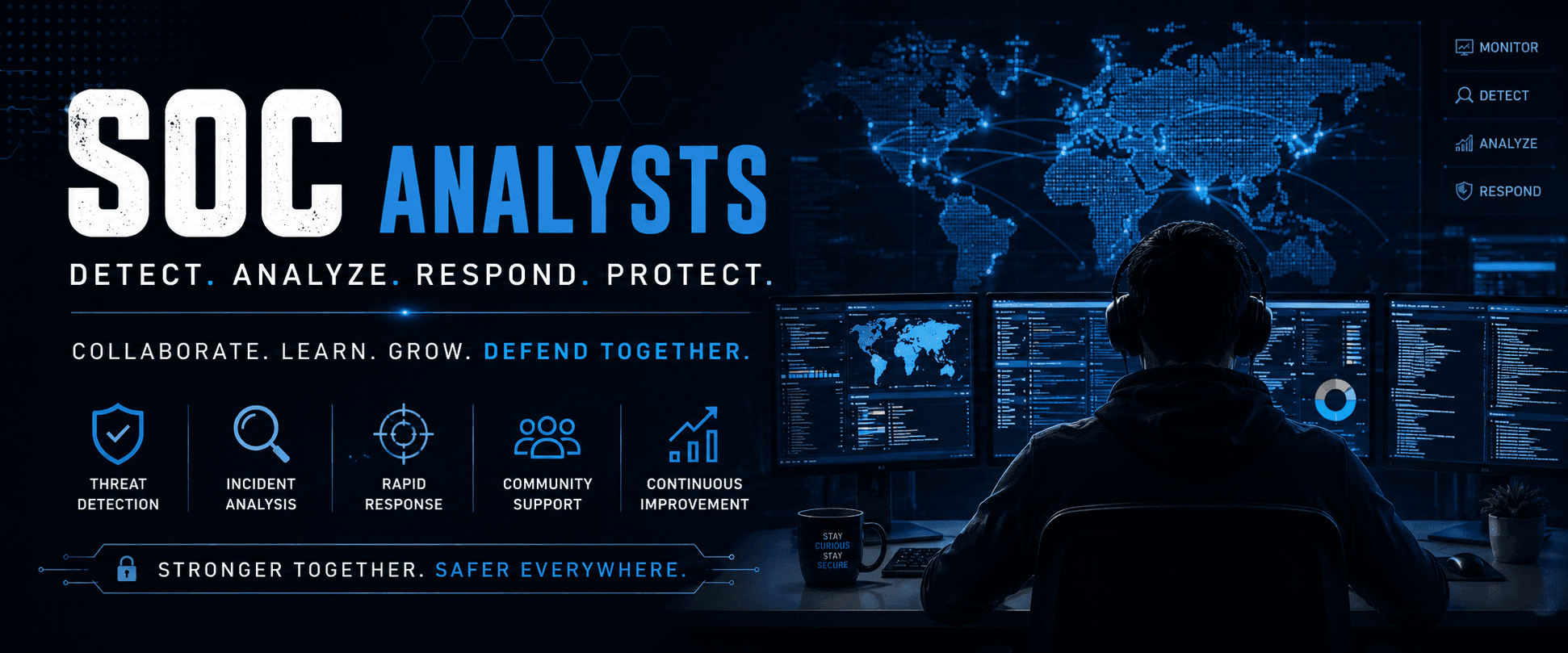
SOC stands for Security Operations Center. A SOC is a team responsible for monitoring, detecting, investigating, and responding to cybersecurity threats. Think of a SOC as the security control room of an organization where analysts monitor alerts and investigate suspicious activity.
What Does a SOC Analyst Do?
A SOC Analyst's primary responsibility is identifying and investigating potential security threats. A typical day may involve monitoring alerts, reviewing logs, investigating suspicious activity, escalating incidents, and documenting findings. The goal is determining whether activity is normal, suspicious, or malicious.
A Typical Investigation
Imagine a security alert appears showing multiple failed login attempts against a user account. A SOC Analyst might investigate which account was targeted, the source IP address, login history, related alerts, and whether compromise occurred. The analyst then determines if the activity is a true threat or a false positive.
Common Tools Used by SOC Analysts
SOC analysts use many different tools. Common categories include SIEM platforms, Endpoint Detection and Response (EDR) solutions, threat intelligence platforms, and ticketing systems. While specific products differ between organizations, the investigative process remains largely the same.
Essential Skills for Beginners
You do not need advanced hacking skills to become a SOC Analyst. Focus on Linux basics, networking fundamentals, security concepts, log analysis, and critical thinking. Strong fundamentals will make future learning much easier.
💡 Tip
Why Log Analysis Matters
Logs tell the story of what happened on a system. SOC Analysts spend significant time reviewing authentication logs, firewall logs, endpoint alerts, and application logs to identify suspicious activity and understand security incidents.
2026-03-22 08:15:11 LOGIN_FAILED user=jdoe src_ip=203.0.113.5
2026-03-22 08:15:15 LOGIN_FAILED user=jdoe src_ip=203.0.113.5
2026-03-22 08:15:19 LOGIN_SUCCESS user=jdoe src_ip=203.0.113.5
Is SOC Analyst an Entry-Level Job?
Yes. SOC Analyst is one of the most beginner-friendly cybersecurity roles. Many professionals start from Help Desk, IT Support, System Administration, or Networking positions before transitioning into a SOC. Some even enter directly into junior SOC roles.
Common Beginner Mistakes
Many newcomers focus on hacking techniques while skipping fundamentals. Understanding systems, networking, and logs is critical before specializing in advanced cybersecurity topics.
⚠️ Warning
A Beginner SOC Analyst Roadmap
Step 1: Learn Linux Basics Step 2: Learn Networking Fundamentals Step 3: Understand the CIA Triad Step 4: Learn the Pyramid of Pain Step 5: Study Malware Fundamentals Step 6: Practice Log Analysis Step 7: Build Hands-On Experience
Recommended BlueSecPath Learning Path
If you're just getting started, complete the Linux Basics Lab, CIA Triad, Pyramid of Pain, Malware Introduction, and Beginner Log Analysis modules. These lessons cover many concepts junior SOC Analysts encounter during real investigations.
Conclusion
SOC Analyst is one of the best starting points for a cybersecurity career. The role teaches investigation, analysis, communication, and defensive security fundamentals. Build strong fundamentals, practice consistently, and stay curious. Every experienced cybersecurity professional started somewhere, and a SOC role is often where that journey begins.